
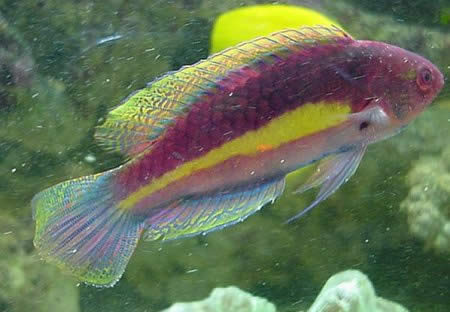
The Labridae family of wrasse fish come in a wide assortment of colors, shapes and sizes!
Wrasses are very beautiful and a real fun addition to a marine aquarium. They are usually very hardy and peaceful, however there are exceptions to every rule. A few species are extremely difficult to sustain in captivity, such as those in the genera Labroides. Some wrasse fish are social their entire lives, others are social as juveniles and become aggressive as adults, and yet others are aggressive their entire lives. Then there are species that are territorial just with members of their own kind.
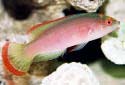
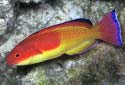
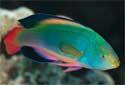
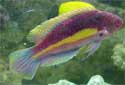
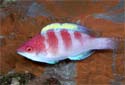
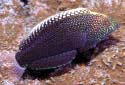
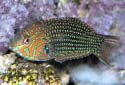
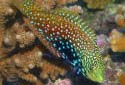
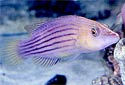
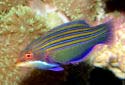
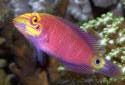
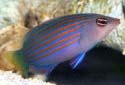
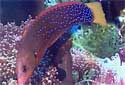
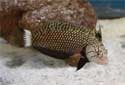
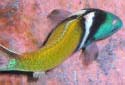
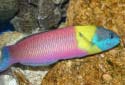
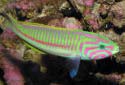
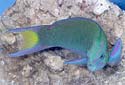
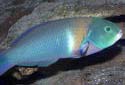
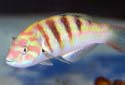
The wrasse species list below includes fish guides for popular Thalassoma Wrasses, beautiful Fairy and Flasher wrasses, as well as many other types of wrasse fish. Each species guide provides facts and in-depth information, pictures for wrasse identification, and fish care covering habitat, feeding, diseases, and more.
The Wrasse family Labridae, contains about 60 genera and over 500 species of fish. Wrasses are found throughout all the tropical regions of the world. They are often very colorful and many, though not all, are well suited to aquarium life. There are lots of variations within the family. Wrasse fish range in size from just a few centimeters to over 2 meters in length, some have cylindrical body shapes while others are deeper bodied. Even within a single species they can go through many color and pattern changes which has made them a challenge to identify. There are stories of two fish of the same species looking so different that they had originally been scientifically described as two separate species.
Like many marine fish, Wrasses mainly use their pectoral fins for movement but will use their caudal fin (tailfin) for fast getaways in emergencies. Many wrasse species will bury themselves in the sand and thus provide a good stirring of the gravel. They are usually good for reef aquaria although they may eat small crustaceans, but again be sure to research the wrasse you are considering to make sure it is compatible with your set up.
These are fast moving fish using a lot of energy, thus a large appetite. With the exception of the cleaner wrasses, these fish are usually not overly picky eaters and will quickly adapt aquarium foods. Although diet varies from species to species, most wrasses eat molluscs and crustaceans in the wild. In the Aquarium they should be fed all kinds of meaty foods, including brineshrimp and most frozen fish foods. Due to their hearty appetite they will put a larger load on the aquarium and water quality will need diligent attention.
For more Information on keeping saltwater fish see:
Marine Aquarium Basics: Guide to a Healthy Saltwater Aquarium
WMW_Ap15AS_vsm.jpg)
FairyWrasseWMW_Ap15AR_vsm.jpg)
FairyWrasseWMW_Ap8W_vsm.jpg)
WTMW_Ap15AS_vsm.jpg)
WrasseWMW_Ap8SW_vsm.jpg)
WTMW_Cn40Da2383_vsm.jpg)

MoonWrasseWMW_Ap8SW_vsm.jpg)
Featured Image Credit: Ralphs_Fotos, Pixabay