
Yes you can! Keeping a saltwater aquarium is fun, and as you advance you can enjoy all sorts of exotic marine life!
There are tons of beautiful saltwater fish and so many interesting invertebrates to choose from. Whether you’re a beginner or an advanced aquarist, you will find keeping a saltwater fish tank one of the most exciting and rewarding adventures.
Check out our Quick Guide! A beginner saltwater aquarium setup in five easy steps. It includes a list of basic marine supplies, how to put the aquarium together, how to cycle the aquarium and then add your fish.
The topics in the quick guide are further expanded, with In-depth information on the types of marine supplies from tanks, filters, and lighting equipment to things to know when choosing your fish and saltwater aquarium care. The steps to setting up the aquarium start with putting the aquarium and supplies together, preparing the water, cycling the aquarium and testing the water, and then add your fish!
There are basically three types of saltwater aquarium setups for marine life. Two of these are saltwater aquarium setups designed for keeping saltwater fish. One is the traditional fish only, or “FO”, saltwater aquarium, and the other is the fish only with live rock, or “FOWLR”, saltwater aquarium.
A third type is the reef aquarium setup. This marine environment is designed primarily for keeping corals and invertebrates, with fish as more of an afterthought. Keeping a reef tank is more technical than keeping a saltwater tank, requiring both more knowledge and equipment. But beware, as you become an advanced marine aquarist, you may find yourself becoming excited about keeping a mini reef!
- For information about reef aquarium setups, see: Reef Tanks: Mini Reef Aquarium Guide
Saltwater vs. Freshwater
There are a few differences between a marine aquarium and a freshwater aquarium, but they are not difficult to understand or work with.
- Fish from different types of water
The most obvious difference in a marine tank is a salt water environment versus a fresh water environment. The needs of fish and other aquatic inhabitants in an aquarium is directly affected by the environment they originated from.
- Saltwater fish
Marine life comes from oceans and seas. These are vast bodies of water with little variation in their water parameters. Because of this, saltwater fish need a stable aquarium with good water quality at all times. Stable water parameters are even more important for corals and invertebrates, which are kept in a reef aquarium.
- Freshwater fish
Fresh water fish come from rivers, streams, ponds and lakes. Weather and other natural occurrences can make their habitats subject to variations in water chemistry and temperatures. Because of this, freshwater fish tend to be more adaptable and tolerant of changes in the aquarium.
- Brackish fish
Brackish water fish come from estuaries and stream or rivers that feed into the ocean, as well as inland salt seas. Weather and other natural occurrences, these environments can also be very changeable. Brackish fish are often very adaptable and tolerant to changes in an aquarium. Some of these fish can be acclimated to a totally freshwater environment or an entirely saltwater environment. Some species will do well, and even thrive, in one or the other, some examples of these are Mono’s and Scats. Other species will slowly fail, like guppies and mollies. There are also some species will thrive in freshwater as juveniles but need to be in saltwater as adults, or vice versa. It is important to know what the ideal parameters for each species are before deciding to add them to a saltwater environment.
- Saltwater fish
- Wild caught fish vs. captive fish
There is a difference between wild caught versus captive specimens.
- Freshwater fish
Many freshwater fish, though not all, have been kept and bred in captivity for many years. Tank raised or pond raised fish are much hardier, both in handling and shipping, than wild caught fish.
- Saltwater fish wild caught
Saltwater fish and invertebrates are mostly collected from the wild. To acclimate wild caught fish takes more care and attention than captive raised specimens.
- Saltwater fish captive raised
There have been great successes in the captive breeding of many marine species, and these specimens are increasingly more available. Like their freshwater counterparts, these captive bred and raised fish are also more durable and adapt more readily to the aquarium.
- Freshwater fish

Choosing the Right Aquarium
Stability of the environment is the most important aspect of successful saltwater fish keeping. Although it is important to choose an aquarium that you think will look good in your living room, there are other equally important considerations that affect the ongoing expense as well as the health of the inhabitants. When choosing your aquarium, it is necessary to consider the ideal environment for the fish. This is especially true if you are planning on a species tank, or you definitely know which fish you want to stock the aquarium with. But still the first consideration, when choosing the aquarium and the equipment, is the stability of the environment.
- Acrylic aquarium vs. glass aquarium
One of the first choices you will face is whether to purchase a glass or acrylic aquarium. Here is a list of five points to consider:- Acrylic is a better insulator than glass so a smaller heater will work for the same sized aquarium and temperature fluctuations happen slower. This is good for stability.
- Acrylic is clearer than glass. It actually lets 14% more light through than glass.
- Acrylic can have a much greater variety of shapes. Acrylic aquariums commonly have rounded corners (rather than seams) and usually have a more ‘contemporary’ look. Acrylic coffee tables and even bubble tanks (like Captain Picard’s aquarium on Star Trek).
- A disadvantage of acrylic is that it scratches much easier (be careful with inside decorations) so special cleaning pads must be used. NEVER use a brillo pad or a green pot scrubber on an acrylic aquarium.
- Perhaps the biggest disadvantage of acrylic is the cost. Usually an acrylic aquarium will cost 2 to 3 times what a similar sized glass aquarium would
- Size of the aquarium
Always choose the largest size aquarium that fits your living room and your budget.- Size in a marine aquarium, size is critical since the fish capacity is three to five times less than a freshwater aquarium.
- Although we have seen successful marine tanks that are smaller, a 20 gallon is smallest size that we can recommend with 60 to 100 gallon tanks being much more desirable.
- The larger the aquarium, the greater your chance of having a successful experience.
- Surface of the aquarium
Always choose a aquarium with the largest amount of surface area possible.- The amount of oxygen available is determined mainly by the amount of surface area the tank has since oxygen enters the water primarily at the surface.
- Although aeration, with an air stone or a power head, seems like it is directly adding oxygen to the water, most of the benefit comes from moving water from the bottom of the aquarium to the surface where oxygen is exchanged for carbon dioxide.
- Saltwater Tank Lighting
Lighting for a saltwater aquarium can be type as that used on a freshwater fish tank. Aquariums are usually purchased as ‘combos’ which means a glass top and a light fixture are sold with the aquarium. The bulbs are purchased separately. The majority of aquarium light fixtures are designed to use flourescent bulbs. You can purchase incandescent lighting fixtures for small aquariums like 5, 10, and 20 gallon tanks, but these are not as common, they are more expensive to run, and they produce more heat.
- Aquarium furniture
All aquariums also need a good, solid stand. Most manufactured aquariums are standardized in size, and there are a variety of stands built for each size of aquarium. Many stands also have a matching canopy available for the top of the aquarium. Although they are not absolutely necessary to have, a canopy on top gives a finished look to your showpiece and most canopies are designed to house the aquarium lights.

Setting Up a Saltwater Aquarium
A quick guide to setting up a marine aquarium in five easy steps. A list of the necessary marine supplies and steps for putting the aquarium and supplies together. Then how to prepare the water and cycle the aquarium, test the water, and now add your fish!
1. Marine Supplies:
(For a beginner saltwater aquarium setup, our preferences are highlighted in bold)
- Aquarium:
Purchase as large an aquarium as possible, a sturdy aquarium stand, and an aquarium light. Most aquariums are sold in a combo with a glass top and light fixture. Light bulbs are purchased separately. - Filter:
For a fish only “FO” aquarium, we recommend an undergravel filter. Under gravel filters provide both stability and ease of maintenance.
Power filters also work well, but tank stability can be affected when you perform maintenance.
NOTE: With power filters, you have to be careful when discarding old filter cartridges. They house much of beneficial bacteria of the biological filtration. A filter with two cartridges is best, then only discard one cartridge at a time. This will help maintain a good bacteria culture. - Pump:
Get either a good air pump,
or 1 to 2 powerheads to run the undergravel filter. Air pumps are less expensive but require more maintenance – i.e. regularly replacing clogged air stones. - Substrate:
Provide a minimum of 2 inches of substrate. Crushed coral, aragonite, or live sand are the best substrates. - Heater / Thermometer:
Get a thermostatic heater suitable for the size of your aquarium and a thermometer. We prefer a thermometer that sticks to the aquarium for easy viewing. If you have a large tank, you may want one for each end. - Aquarium Salt / Hydrometer:
Get a hydrometer to measure the salinity (specific gravity) of the water, and a good salt mix. Get at least enough salt to do 1 1/2 times the volume of your tank. - Water:
DO NOT use distilled water.
– Purified water is best, but not essential. For purified water, use R/O (reverse osmosis) or deionized water.
– If you are not using purified water make sure you purchase some kind of a water conditioner that removes chlorine unless you know there can be no chlorine added to the water. It is better to be safe than sorry. - Aquarium Test Kits
Get saltwater test kits for ammonia and nitrite (these are the minimum, add others as need arises). - Aquarium Decor
Now is also a good time to buy any ornaments that meet your fancy. Saltwater fish feel more secure and comfortable with some type of an environment. Coral skeletons and live rock are good choices that are also beneficial, but other synthetic ornaments are also fine. (Be sure pieces of live rock you buy are cured).
2. Setup the saltwater aquarium:
- Place the aquarium on a sturdy floor in a relatively draft free area.
- If using an undergravel filter, put it in place on the floor of the tank. Add either the airstones or the powerheads in the uplift tubes.
- Rinse the substrate material thoroughly, then place it on top of the undergravel filter.
- Fill with water. Mix the salt in the water either before or after placing it in the aquarium. Make sure the specific gravity is between 1.020 and 1.025. (Note: After this always mix the salt water separately, before placing it in the aquarium!)
- Place the heater, ornaments, thermometer, and any lights in or on the aquarium.
3. Run the Aquarium
- The aquarium should be kept ‘running’ for at least 24 hours.
This is so the water is oxygenated and the salt has been mixed for at least one full day (24 hours). - Make sure the temperature is stabilized at an acceptable level between 74 to 80 degrees..
- The aquarium should be kept ‘running’ for at least 24 hours.
- 4. Cycle the Aquarium and then add fish
- Establishing and maintaining the nitrification cycle is one of the most important parts of keeping a marine aquarium successfully.
- There are three methods of cycling the aquarium. To learn about the aquarium cycle, see Cycling the Aquarium.
- 5. Monitor the ammonia and nitrite levels:
- Test the ammonia and nitrite levels until they are both zero (or very close to zero).
- During the aquarium cycle, the ammonia will peak first and then drop off as the nitrite peaks.
- Don’t add fish in the middle of this process. (If introduced before the nitrification process begins, the hardy damsel fish have a good chance of surviving, because the levels go up gradually instead of all at once.)
- After the levels drop to zero, add fish slowly and keep an eye on the ammonia and nitrite levels to make sure the aquarium is stable.

Inside the Aquarium
What happens in the aquarium is the next important consideration. All the additions help to keep your aquarium stable and optimal for your fish. From the salt you add to the substrate and decor, even the filter helps optimize the tank beyond their intended uses. Finally, how many fish you add will effect the tank. Look at some of the things you are putting in your tank:
Aquarium salinity
Specially formulated salt must be added to the marine aquarium water. For salt we use Coralife or Instant Ocean, but any major brand will work as well. Measured with a hydrometer, the specific gravity of the saltwater aquarium should be between 1.020 and 1.025. This is about 1/2 cup of salt per gallon.Aquarium substrates and decorations
To keep the hardness and calcium at higher levels, crushed coral and/or aragonite should be used in a marine aquarium. Marine aquarium decorations can also help with this. Use coral skeletons, shells, and other calcium containing objects.- Oxygenating the aquarium
Water movement at the surface increases oxygenation and is necessary for the health of the fish.- Water movement is most often provided by the filtration system.
- Powerheads, airstones, and other types of bubblers and bubble wands also help provide oxygen. These items help increase water movement, but it is still water movement at the surface that adds oxygen.
- Increased oxygen will allow for an increase in the stocking capacity of an established tank.
- Keep in mind that airstones and power-heads can (and generally will) fail at some time or another so don’t overstock an aquarium to the point that your fish will die if the power goes out for a couple of hours!
Saltwater Aquarium Filtration
There are three main types of filtration used in saltwater aquarium setups. Several other methods that are more commonly used in reef systems can also be beneficial for fish only systems and will also be mentioned here.
- Biological Filtration
This is the most important type of filtration for stability and reduction of toxic wastes. In any biological environment there will be a production of ammonia from normal respiration (fish releasing ammonia from their gills) and the breakdown of wastes. Ammonia is toxic to fish, but through biological processes, it is transformed into a non-toxic chemical – nitrate.
Nitrification process:
Nitrification is the process of turning ammonia to nitrate, and is carried out in the presence of oxygen (aerobic conditions).- First ammonia is reduced to nitrite by a bacteria called Nitrosonomas.
- Unfortunately, the nitrite created is also poisonous to fish.
- But the nitrite is then further broken down into nitrate by bacteria called Nitrobacter.
- The final product, nitrate, is relatively harmless to fish and is a primary food for plants and algae.
- Frequent water changes (say 10% every week or two) will control nitrate levels.
Denitrification process:
Denitrification is the process where nitrates are converted to nitrogen gas in the absence of oxygen (anaerobic conditions). Denitrification is generally not of concern to the marine aquarist unless the control of nitrates is desired (See Reef Filtration Systems).
Types of Biological Filtration:
- Under-gravel filters
Under-gravel filters are the most common type of biological filter and work by pulling water down through a bed of gravel at the bottom of the aquarium and pulling it up through the uplift tubes. Reverse flow undergravel filters are set up to pull water from the top of the aquarium by pushing it down the uplift tubes and up through the gravel. Reverse flow filters are slightly more efficient since they take water from the top of the aquarium which contains more oxygen.
- Trickle-filters
Nitrification is more efficient in the presence of oxygen. Air contains about 20% oxygen compared to water, which has only about 7% oxygen. Trickle or wet/dry filters, developed in the 1980’s, increased the efficiency of biological filters dramatically.
Trickle-filters place the bacterial growing medium (filter balls with large surface areas) in the air, usually outside the aquarium. Then they trickle the water to be filtered over them. Many kinds, sizes, and shapes of trickle filters have been in use since they were introduced. Although many trickle filters are external devices used in a sump or hang on the back type of filters, several manufacturers including the “Sea Clear System II” aquarium contain trickle filters built into the back of the aquarium itself.
The problem with trickle filters is they usually produce high levels of nitrate, and so are not often used in reef aquariums or other situations where nitrates are undesirable.
- Live Rock and Live Sand
Live rock and live sand are used in reef and marine systems as a biological filter. Live rock gives the added bonus of having de-nitrifying bacteria deep inside the rock to help remove nitrates. At least 2 inches of live sand should be used if used exclusively for the biological filter, live rock at 1.5 to 2.0 lbs. per gallon of water is usually recommended. Read more here about live rock and sand.
| Types of Biological Aquarium Filtration | |
|---|---|
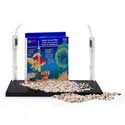 Undergravel filters use either an airpump or powerheads to pump water from under the gravel through the uplift tubes to the top of the aquarium. | 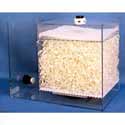 Wet/Dry Trickle Filters Models like these use gravity to feed overflow water from the aquarium and return it using a pump or power head. |
- Mechanical Filtration
Mechanical filtration refers to the removal of particulate matter from the aquarium. Debris, leftover food, and other particles are “mechanically” collected on some sort of filter media. Mechanical filtration is good for keeping the water clear and free of debris.
Types of mechanical filters:
- Power Filters
Power filters force the water through some kind of floss, a sponge, or other filter media. This media is often sold as a filter cartridge, which will need to be replaced regularly as it gets soiled.
- Canister Filters
Pleated cartridges inside a canister act as mechanical filters. The filters will need to be cleaned periodically as they collect debris.
As an aside:
Diatomaceous earth filters are also commonly available in canister filters. They can remove particles as small as 3 microns in size. This fine filtering really ‘polishes’ the water. This type can be used to remove bacteria and algae blooms, but they generally clog after just a short period of time and should not be used on a continuous basis.
- Under-gravel Filters
Under-gravel filters, though primarily used for biological filters, also act as mechanical filters by trapping debris in the gravel. The debris is cleaned up with a gravel siphon, ideally when doing a water change.
- Power Filters
| Types of Mechanical Aquarium Filtration | ||
|---|---|---|
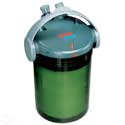 Mechanical filters pump water through a fine material or sponge to remove particles. Several types of canister filters such as the Fluval, also provide biological and chemical filtration with 3 media compartments, one for each of the filtration types. | 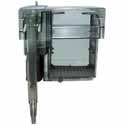 Power Filters hang on the back of the aquarium and pump water through filter pads. The pads can also contain carbon for chemical filtration as well. | 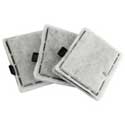 Power filter require the a cartridge, designed for it. The cartridge may also contain small amounts of carbon, giving chemical filtration as well as mechanical filtration. |
- Chemical Filtration
Chemical filters are used to remove things that are dissolved in the water, and therefore cannot be removed by mechanical filters. They are most useful in getting rid of the yellow color that often develops in aquarium water over time.
These compounds are available in cartridges that snap into the uplift tube on an undergravel filter, and as part of a filter cartridge pad that is placed in a compartment in a power filter. They are also available in bulk, which d can then be used by filling in a mesh bag with the compound and placing it in a compartment in a powerfilter or a canister filter.
| |
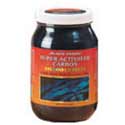 Activated Carbon | |
 Ammonia Removers | |
 Nitrate Removers | |
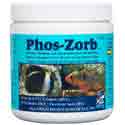 Phosphate Removers |
| |
| |
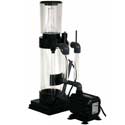
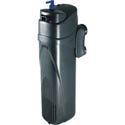
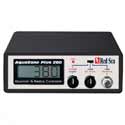
UV – Ultraviolet sterilizers This is a Submariner in-tank model made for an aquarium application. The bulbs should be replaced about every 4-6 months. | |
|
Choosing Saltwater Fish
One of the best things about setting up an aquarium is choosing the fish. There are many fabulous saltwater fish and even some invertebrate that do very well in a fish only aquarium. When choosing the inhabitants for your saltwater aquarium, the size of the tank, compatibility of tank mates and the diet requirements are important considerations.
- Saltwater Aquarium – Stocking Capacity
The first thing you will need to know is how many fish you can keep in a particular sized aquarium. The number of fish that can be safely kept in a marine aquarium is 1/3 to 1/5 fewer than that of a freshwater aquarium. Be careful to not overstock the tank, as that can have devastating results. It is better to have a few less fish that are colorful and healthy than to push the limits of the tank and risk loosing some of your fish. Not only are fish happier, but the maintenance is easier too.
Formulas to help determine the number of fish:
- Common formula
The most common formula for the amount of saltwater fish you can safely keep is based on the number of gallons of water in the aquarium. The rule-of-thumb for the number of fish in a saltwater aquarium is about 1 inch of fish for each 5 gallons of water.
This simple method doesn’t take into account the surface area of the water (for oxygenation), the filtration system (for removal of wastes), and the general size of the fish. For instance, a fish that is 6 inches long needs a lot more oxygen than 6 fish that are 1 inch long. In general you should reduce the amount of fish if they are larger, and increase the amount of fish if they are smaller. Another method is to:
- Surface area formula
Calculate the surface area of the aquarium and divide by 48 to get the number of inches of fish the aquarium can handle.
This method takes into account the aquarium shape but not the filtration or the size of the fish. The second formula favors aquariums that are shorter and wider i.e. not ‘show tanks’ which are taller and skinnier.
- Other formulas
There are other formulas, but they are more complicated. In general the more complicated formulas are not worth the trouble if you don’t approach the maximum number of fish calculated by the above formulas. Perhaps if anyone shows interest, we can write more on this later.
- Common formula
- Saltwater Aquarium – Type of Fish Community
You should have some idea of what type of fish you want to keep before stocking the tank. Decide if you want a community tank or a species aquarium. Do some research on each saltwater fish before adding them to your aquarium. Learn about the needs and temperament of each species you want to keep. This will help avoid problems later with tank mate compatibility and also avoid any feeding challenges.
- Some fish are predatory or aggressive. These so should be kept either by themselves, or with other predatory species. For instance a neat predatory aquarium can contain lionfish, eels, and groupers. But smaller fish like damselfish and cardinals could quickly become lunch!
Note: Aggressive species include many triggerfish, damsels (especially as they get older) and some angelfish and groupers. Tangs can become territorial and aggressive towards other Tangs that are added later. To avoid this you can change the decorations around before adding a new tang to an established aquarium.
- Some fish are slow feeders, or are very shy and should be kept by themselves in a species tank. Examples are shrimpfish and seahorses.
- Some fish only eat live foods. Make sure you can provide the diet your fish need.
- Some fish are predatory or aggressive. These so should be kept either by themselves, or with other predatory species. For instance a neat predatory aquarium can contain lionfish, eels, and groupers. But smaller fish like damselfish and cardinals could quickly become lunch!
Saltwater Aquarium Care
Once the aquarium has fish and is fully cycled, regular aquarium care is needed to keep the tank stable, which ensures the health of the fish or other inhabitants. Each of our saltwater fish guides has specific feeding, care, and maintenance information. But here are a few general tips on feeding and maintenance.
- Feeding
Make sure you know of any special feeding requirements your fish may have before purchasing them and be sure you can provide the foods they need. Some fish can have very specialized diets, especially Butterflyfish, some Angelfish, Parrotfish, and Anthias. It is not uncommon to find fish for sale that require coral polyps (called obligate coral feeders) or sponges in their diet. Corals are impractical and very expensive to buy as food but some specialty food manufacturers include sponges in their ‘angel formula’ frozen food formulas.
- Some fish are used to eating all the time, and they should be fed as often as is practical. Always small amounts at least once per day.
- Other fish, like eels can go for several days without food.
- Encourage your fish to eat as many different kinds of food as you. This will help ensure that they are getting everything they need.
- The more you feed your fish the faster they will grow to their maximum sizes.
- Scheduled Aquarium Maintenance
Aquariums require care daily, bi-weekly, monthly and more. For information about saltwater aquarium maintenance scheduling, see: Fish-Care, Maintenance
- Maintaining Water Quality: Marine aquarium systems need partial water changes on a regular basis. Some of the reasons for water changes are to remove nitrates, replenish trace elements, and to clean the gravel of accumulated detritus. Detritus are grayish piles of “mulm” that a accumulate in the aquarium.
- Water changes:
- The recommended water change is about 20% per month.
- In deciding how much and how often you wish to do water changes, keep in mind that for stability, smaller water changes done more often are better than large water changes done less often.
Note: This is more often than what is recommended for freshwater. - It is a good idea, although not absolutely necessary, to use water that is filtered by either reverse osmosis, or deionization.
Distilled water (which essentially strips the water) can be used along with a good salt mix to re-introduce essential trace elements, but costs quite a bit more than water filtered by reverse osmosis or deionization. Note: Using distilled water is not generally recommended. - Only add salt when you are changing water. When you exchanging water, you are replacing water that has been siphoned out.
- Add fresh water without salt when replacing water that has evaporated (which happens on a daily basis).
- Any activated carbon you are using should be replaced monthly.
Additional Aquarium Resources
- Aquarium Glossary
- Aquarium Calculator- Instant Calculations and Conversions!
- The Tao of Marine Aquaria: Tips for Our Hobby and Life Lessons One to Seven, by Adam H. Whitlock,
- Animal-World References: Marine and Reef
- Nick Dakin, foreword by Julian Sprung, Complete Encyclopedia of the Saltwater Aquarium , Firefly Books, Ltd, 2003
- Vincent B. Hargreaves, The Complete Book of the Marine Aquarium, Thunder Bay Press, 2002
- Bob Goemans, The Marine Fish Health & Feeding Handbook: The Essential Guide to Keeping Saltwater Species Alive and Thriving, TFH Publications, 2008
- Julian Spring, Algae: A Problem Solver Guide (Oceanographic Series), 2002
- Martin A. Moe Jr., The Marine Aquarium Handbook, 1992
- Julian Spring and J. Charles Delbeek, The Reef Aquarium – Volumes One and Two
, 1994, 1997
- Julian Spring, The Reef Aquarium: Science, Art, and Technology, (Volume 3), 2005
- Helmut Debelius and Hans A. Baensch, Marine Atlas
- Dr. P.V. Loiselle and Hans A. Baensch, Marine Aquarist Manual
- Martin A. Moe Jr., Marine Aquarium Reference, Systems and Invertebrates, 1992
Featured Image Credit: PickPik