
The “clowns” of the sea are named for their colors and their adorable ‘waddle-like’ swimming motion!
Clownfish are some of the most popular fish in the saltwater aquarium hobby. They are very beautiful, quickly catching the eye, and fun to watch. Even before Nemo became a household name they were extremely popular. Many marine enthusiasts enter the hobby simply because of their attraction to these colorful beauties.
To scientists these fish are commonly known as Anemonefish though in the aquarium hobby they are more popularly called Clownfish. Their colorful appearance and comical swimming style is truly clown-like. However true to their Anemonefish name, you will often see them nestled in an anemone. All other fish will avoid anemones due to their stinging tentacles while Clownfish can have an immunity to these stings. In the wild they actually live in a symbiotic relationships with certain anemones and benefit from each others company for food and protection.
Fortunately it is not necessary to have an anemone to keep a Clownfish in captivity. They will readily adapt without one and will frequently find a substitute host in a coral or rock structure, or another invertebrate. If you do decide to keep an anemone choose one that your clownfish is known to like. You will also need to make sure the anemone’s special needs are met
The list of saltwater clownfish below includes many aquarium species. Each fish guide has in-depth clownfish information with their places of origin, habitats, behaviors and the anemones they associate with. They also include the fish care needed for successfully keeping Clownfish in saltwater aquariums. Pictures are also provided with each guide to help with fish identification.
For more Information on keeping saltwater fish see:
Marine Aquarium Basics: Guide to a Healthy Saltwater Aquarium

ClownfishWHC_Ap8SCl_vsm.jpg)
WMW_C1466_vsm.jpg)
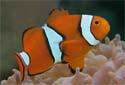
Facts About Clownfish
Clownfish along with the Damselfish are members of the Pomacentridae family. The majority of the fish in this family are the Damsels which are generally quite hardy aquarium inhabitants. Unfortunately many can become territorial (aggressive) when they get older with only a few exceptions such as the Green Chromis, the Blue Reef Chromis, and the Skunk Clownfish.
The Pomacentridae family is further divided into subfamilies, and this is where the Clowns and Damsels are separated. Clownfish are placed in the subfamily Amphiprioninae or Anemonefishes. It consists of 30 recognized species with one specimen placed in the genus Premnas, and all the others placed in the genus Amphiprion.
These fish range from about 2.5″ (6 cm) in length for the smallest, which is the Percula Clown, up to about 6.3″ (16 cm) for the large Maroon Clownfish. Depending on the species they can live five years or more with proper care. Depending on species they can live five years or more with proper care.
Clownfish Types
There are currently 30 described Clownfish species and a number of them are available in the hobby. The easiest way to understand individual types and learn about its peculiarities is to group them into like kinds, so these fish have been grouped into “complexes”. There are basically six recognized clownfish complexes:
- Percula Complex:
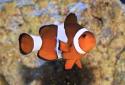
The two most common Clownfish seen in the aquarium hobby are the two from the Percula Complex. These species have also been bred in captivity with a number of color morphs being developed.- Percula Clownfish Amphiprion percula
True Percula Clownfish is another common name it is known by.
This is a well known favorite classic in orange contrasted with white markings.
A unique variety of this species has been developed that has an elongated horizontal white band in the center of its body. This variety is known as the Picasso Clownfish or Picasso Percula Clownfish. - Ocellaris Clownfish Amphiprion ocellaris
Common Clownfish and False Percula Clownfish are other common names it is known by.
The Ocellaris is very similar in appearance to the Percula Clown and is often mistaken for it as they both have the classic orangish coloring and contrasting white markings.
There are some interesting varieties including a true ‘clown’ looking fish, the Snowflake Ocellaris Clownfish that has a large splotched white patterning across its body. Another is a solid orange Clownfish, lacking the familiar white stripes, that is called the False Naked Percula.
- Percula Clownfish Amphiprion percula
- Maroon Complex
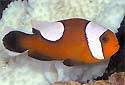
Some clownfish with prominent band patterns include those from the Maroon Complex. There are just two fish in this complex available to hobbyists and they are perhaps some of the most gorgeous. These are the Maroon Clownfish Premnas biaculeatus and a striking variety called the Gold Striped Maroon Clownfish.- Maroon Clownfish Premnas biaculeatus
This species is one of the most gorgeous clownfish, though it is quite territorial. - Gold Striped Maroon Clownfish
This is a striking variety of the Maroon Clownfish. The ‘White-striped’ Maroon or the ‘Yellow-striped’ Maroon are also used to identify it and are based on the color of its stripes.
- Maroon Clownfish Premnas biaculeatus
- Clarkii Complex
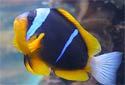
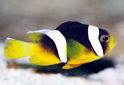
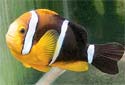
The Clarkii Complex is another group with prominent band patterns which contains 11 species. These are handsome, hardy clownfish favored by aquarists for their ease of care.- Clark’s Clownfish Amphiprion clarkii
Clark’s Anemonefish, Clarki Clownfish, and Banded Clownfish are a few of the other common names it is known by.
This is one of the most popular, hardy, and readily available members of the Clarkii Complex. - Allard’s Clownfish Amphiprion allardi
Allard’s Anemonefish is another common name it is known by.
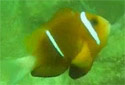
This is another favorite that is occasionally available. - Twobar Anemonefish Amphiprion bicinctus
Two-Band Anemonefish and Red Sea Clownfish are other common names it is known by.
This is another from the Clarkii Complex that is occasionally available. - Oman Anemonefish Amphiprion omanensis
This is a a handsome fish from the Clarkii Complex, but a rare find in the hobby. - Three-band Clownfish Amphiprion tricinctus
A handsome fish from the Clarkii Complex is one of the larger anemonefish, reaching up to 5.1″ in length, It is also known to vary in color from golden yellow to black. It is sometimes available, but not as common as some of the other Clarkii members.
- Clark’s Clownfish Amphiprion clarkii
- Saddleback Complex
Some of the most distinguished looking Clownfish are members of the Saddleback Complex, which of course includes the Saddleback Anemonefish Amphiprion polymnus. It also includes the Wide Band Anemonefish Amphiprion latezonatus also known as the Lord Howe Clownfish, along with the popular Sebae Clownfish Amphiprion sebae. People often ask for the Sebae Clownfish for inclusion in a reef aquarium. This is because of its name, in people’s minds it is associated with the Sebae Anemone.- Sebae Clownfish Amphiprion sebae
This is one of the best known clownfish, and a very popular member of the Saddleback Complex.
People often ask for the Sebae Clownfish for inclusion in a reef aquarium. This is because of its name, in people’s minds it is associated with the Sebae Anemone. - Saddleback Anemonefish Amphiprion polymnus
Of couse this handsome fish is in the Saddleback Complex. - Wide Band Anemonefish Amphiprion latezonatus
Lord Howe Clownfish is another common name it is known by.
- Sebae Clownfish Amphiprion sebae
- Tomato Complex
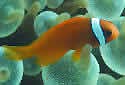
The Tomato Complex includes some of the most regular aquarium species, but these species are without as much patterning as others. These two Clownfish have just one white band located behind the eye.- Tomato Clownfish Amphiprion frenatus
This is one of the two most often seen clownfish. - Cinnamon Clown Amphiprion melanopu
This is the other most often seen clownfish from this complex.
Black Clownfish or Red and Black CLownfish are other common names it is known by.
- Tomato Clownfish Amphiprion frenatus
- Skunk Complex
Clownfish from the Skunk Complex are a bit more unique looking. The Skunk Clowns are easily identified as they have a white ‘skunk’ type stripe running along the entire length of their back.
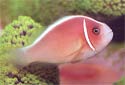
The Pink Skunk Clownfish Amphiprion perideraion is another easily obtainable clown, and occasionally the Orange Skunk Clown Amphiprion sandarcinos can be had. The Skunk Clowns are easily identified.- Pink Skunk Clownfish Amphiprion perideraion
This variety is another easily obtainable clown, - Orange Skunk Clown Amphiprion sandarcinos
This variety is not quite as easily obtainable, but can be found.
- Pink Skunk Clownfish Amphiprion perideraion
Clownfish and Sea Anemones
In nature Clownfish live in symbiosis with certain anemones, where each member provides a benefit to the other. The clowns help their host by vigorously chasing off any intruders, cleaning it, and even feeding it. In return the host anemone will protect the Clownfish with its stinging tentacles; tentacles that only Clownfish are immune to! In nature many clowns will live with the same anemone but only one will be dominant. The dominant fish will be a female and all the rest will be males.
In the aquarium you may or may not provide an anemone for your Clownfish. They will readily adapt and may even use a coral, other invertebrate, or a rock structure as a substitute if there is no anemone available. If you do choose to include an anemone, it will need lots of light. A system that offers 2 to 5 watts per gallon and preferably with some blue spectrum provided by actinic light bulbs or higher temperature metal halide lighting is best.
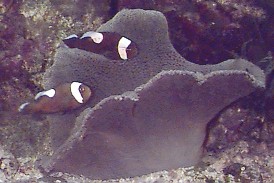
Saddleback Anemonefish with a Saddle Anemone
Amphiprion polymnus, Stichodactyla haddoni
Animal-World: Courtesy David Brough
There are certain anemones that each type of Clownfish is found with in nature, and the particular host anemones are listed with each clownfish in its guide. However many clowns will readily adopt other types of Anemones in the aquarium. Although there are over 1100 types of sea anemones, only these 10 species are known to host Clownfish:
- Adhesive Sea Anemone Cryptodendrum adhaesivum
- Bubble Tip Anemone Entacmaea quadricolor
- Beaded Sea Anemone Heteractis aurora
- Sebae Anemone Heteractis crispa
- Magnificent Sea Anemone, Ritteri Anemone Heteractis magnifica
- Delicate Sea Anemone Heteractis malu
- Long Tentacle Anemone Macrodactyla doreensis
- Giant Carpet Anemone Stichodactyla gigantea
- Saddle Anemone Stichodactyla haddoni
- Merten’s Carpet Anemone Stichodactyla mertensi
Beginner Clownfish Species
Many Clownfish are very hardy and make great fish for a beginning aquarist. However there are a few that are somewhat more delicate, and some species that need to be kept singly. Unless you have a very large tank it’s best to keep only one clownfish, or one mated pair per tank, as they can be very aggressive towards other clownfish species. These fish vary not only in their personalities but also in their level of care.
Clownfish species that are most suitable for beginners are hardy and easy to obtain. These include the peaceful Skunk Clownfish and the mild-mannered Ocellaris Clownfish. The Tomato and Cinnamon Clowns, along with the Clark’s Anemonefish, are also very hardy and readily available but they are a bit more territorial. The Maroons are very aggressive and have no tolerance for other clowns, not even their own kind, but they too are hardy and commonly available.
Species that are not ideal for beginners include the Percula Clownfish. Although these are the smallest species of Clownfish they are a bit more costly and require more attention to water quality than the hardier varieties. There are a few other varieties that stress easily and acclimate slowly to the aquarium, so are not suggested for a new aquarist. These include the Sebae Clownfish, the Saddleback Anemonefish, and the Wide-Band Anemonefish.
Clownfish Habitat
These fish are generally very hardy and will do well in most saltwater aquariums. A minimum 20-gallon aquarium is suggested for the small to medium species, the larger species will do better with a minimum of 30 gallons. Include rock structures and other decor for hiding along with plenty of open space for swimming.
Clownfish in an aquarium have no special lighting requirements but if kept in a reef environment many of the other inhabitants will need very strong light. You can provide a host anemone but you must have a healthy system to keep up with the nutrient requirement of this animal.
Reef aquariums require lots of live rock and live sand. Beneficial bacteria will populate the sand and rock and help keep the water clean. This type of tank needs the addition of some specialized equipment to provide good water movement and strong lighting. Reef tanks also require excellent filtration and a protein skimmer is beneficial as well. Regular water changes are very important because they replace important trace elements that the fish and corals use up, like calcium, magnesium, strontium and iodine. For more information on keeping a reef tank, see the Mini Reef Aquarium Guide.
Clownfish Care
Taking care of clownfish in a saltwater aquarium is moderately easy. You will need to maintain their habitat, feed the appropriate foods, and make sure they are housed with ther right tankmates. Once they are well established, a pair will often begin to spawn, making them an even more exciting marine fish to keep.
- Maintaining the Aquarium
The aquarium needs to have good filtration to maintain water quality and a stable environment. Salinity levels should provide a specific gravity of 1.020 to 1.026 and water temperatures between 75 – 82° F (24 – 28° C). Doing 15% water changes twice a month will go a long ways towards keeping your aquarium stable and healthy.
- Feeding Clownfish
Clownfish are opportunistic eaters. In captivity they will eat almost everything that it is offered. They will readily consume all types of meaty and vegetable foods. Ideally you should provide them with a good variety of live, frozen, and flake foods. These can include such foods as mysis and brine shrimp, spirulina flakes, bloodworms, krill, and finely chopped meaty foods.
Feed your Clownfish at least once a day. A rule of thumb when feeding once a day is to feed them what they will eat in about five minutes. It is okay to feed the fish more than once a day, with two or three feedings, but then only feed them only what they will consume in about three minutes. If you feed large pieces of meaty food, you can watch the Clownfish grab the chunks, and then deposit them into the anemone.
- Social Behaviors of Clownfish
Whether Clownfish live with a host anemone or have a substitute host, they can become very territorial. They will vigorously protect their host against intruders. Luckily, their aggression is usually limited to the immediate area around the host, so they’re not usually a threat to other fish or invertebrates throughout an aquarium.
In personality, each of the many different kinds of Clownfish has its own temperament. Of those most commonly available, the Maroon Clownfish are notorious for their aggression toward tank mates, while Tomato Clownfish and Cinnamon Clowns are only moderately aggressive. The Percula Clownfish also tend to be somewhat aggressive but most of the other species tend to be more moderate. The Ocellaris clown is notably mild-mannered. The Skunk clowns tend towards shyness and can actually be dominated by aggressive tank mates.
- Breeding Clownfish
Clownfish are sexually dimorphic with the females of most species being larger than the males. A pair will need good water quality and stable conditions for several months to a year before they will spawn. Once they have started spawning they will continue to lay eggs at regular intervals.
Mated pairs will reproduce in captivity and many species have been successfully propagated. A stable aquarium is the key to successfully breeding and rearing clownfish. Baby Clownfish will need to be raised in a separate aquarium, as corals and other fish will consume the new fry within just a few hours. See Breeding Marine Fish for information on reproductive habits and how to breed clownfish.
Featured Photo by David Clode, Unsplash