
Plants that are healthy actually help keep the aquarium water filtered and the planted tank beautiful!
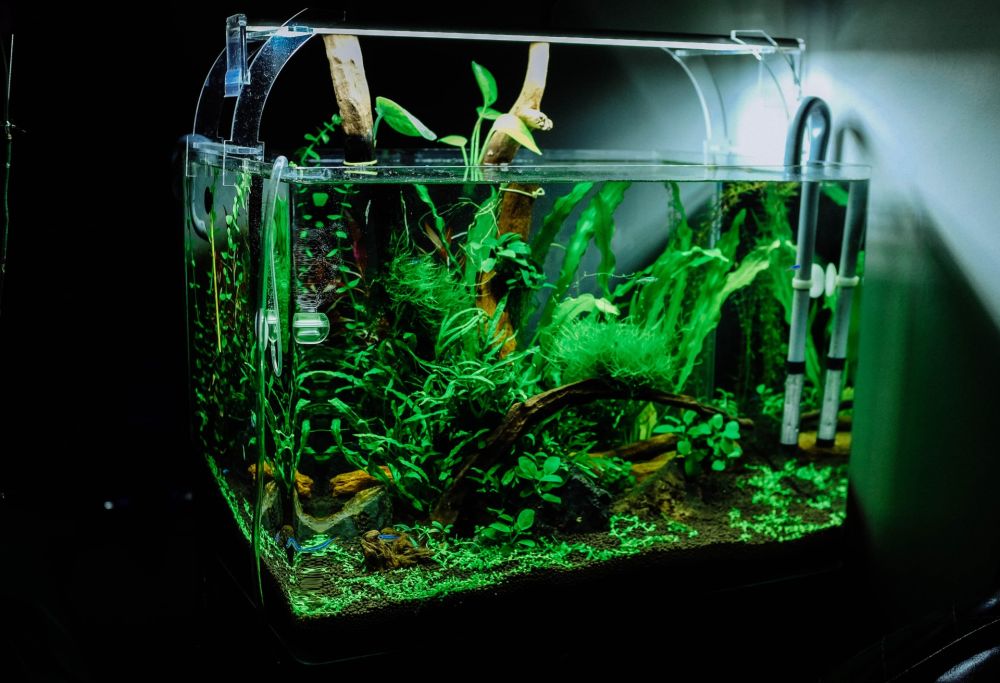
Healthy live aquarium plants can create not only a spectacular aquarium design, but also help maintain a healthy aquarium. Water plants can culturally help create the correct tank conditions needed for maintaining healthy plant and fish populations.
To keep planted aquariums healthy and nice looking, some basic plant care measures should be performed regularly. Feeding aquatic plants is the same thing as fertilizing their environment with nutrients. Nutrients should be present in both the substrate and the water to assure the plants are getting the proper amounts. With a nutrient rich environment, they can then undergo photosynthesis and provide themselves with food and energy.
Though many of the necessary nutrients are available as a natural aspect of the normal aquarium setup, the substrate and water, these alone are not enough for plant maintenance. Other nutrients need to be provided through the additions of fertilizers and aquarium co2 systems. Regular aquarium and plant maintenance, along with maintenance over time, will also be needed.
Feeding Needs
Many nutrients are already present in fresh water aquarium substrate. Macro nutrients that are usually present include oxygen, hydrogen, calcium and nitrogen. In a normal well-maintained aquatic environment, only some nutrients must be provided regularly.
Nutrients that generally need to be provided for planted aquariums are; magnesium, sulphur, potassium, carbon, and phosphorus. These micro nutrients are usually provided through liquid fertilizers and also in tap water that is used in changing the water.
Fertilizing methods
There are different ways of fertilizing your aquarium depending on the type of water, the type of plants, and what nutrients are needed.
- Substrates:
Nutrient rich substrates, soil-based substrates, or nutrient-rich substrate additives are a great way to ensure that there are enough nutrients present. One commonly used soil additive is pure laterite, which can be placed in balls near the plant root. - Tablet fertilizers:
A slow-release planted aquarium fertilizer (tablet fertilizer) can also be used. Aquatic plant food tablets can be used to provide an additional source of nutrients but should not be used as the primary source of nutrients.
Tablets are placed on the bottom of the aquarium and must be replaced whenever they are used up. - Liquid fertilizers: Liquid plant fertilizers are often used to supply small amounts of some nutrients. A good example of a liquid plant fertilizer is Flora Pride or Leaf Zone.
They should be used regularly (usually with every water change) but should be used with caution because you do not want to over-fertilize.
- Uneaten Fish food (use sparingly):
One subtle way of fertilizing that occurs is through small amounts of uneaten fish food and from fish excretions.
This detritus contains nutrients needed for plants such as phosphate and potassium. However, this should not be the primary method for fertilizing. Also be sure not to overfeed as it will cause excessive amounts of rotting debris.
Aquarium Co2 Systems
Carbon dioxide fertilization
Carbon dioxide fertilization is practically essential. Carbon dioxide is one of the major nutrients that plants need for photosynthesis and therefore to continually grow and stay healthy.
Although carbon dioxide is released from the fish and from the substrate, it is not usually enough to maintain plants. CO2 Systems are used to keep carbon dioxide at optimal levels for plant growth. An added benefit is accurate control of the aquarium Ph.
Different carbon dioxide fertilizers that are available come in various aquarium co2 systems:
- Systems with tablets that slowly dissolve
- Cylinders that are connected to timers and release small amounts of carbon dioxide at regular intervals
- Slow-release chemical reactors.
For more information about aquatic plant nutrients see: Aquarium Plant Water Maintenance – Water Hardness, pH, Macro-nutrients, Micro-nutrients
Plant Maintenance
Regular maintenance of planted aquariums is just as vital as maintenance for a fish only aquarium. Here are some tips for keeping aquarium plants healthy and your tank in top shape::
- Visual checks: Things to do regularly include checking how healthy the plants and fish appear, checking to make sure everything in the aquarium is working properly (i.e. lights, filters), checking the temperature, and feeding the fish and plants.
- Algae & debris removal: Removing algae once a week is a good idea, since algae can “take over” the plants, basically covering them and killing them, and it also can release toxins that are damaging to both plants and fish. Remove any dead plant leaves and brush off any debris that may collect on the plants.
- Water changes: Also change one-fifth to one-third of the water at least twice a month (changes are required more often the more fish you have) and siphoning debris from the bottom is recommended.
- Water testing: Testing the water for nitrates, pH and water hardness should be done about once a week.
- Maintenance over time: Over time, the substrate may become too polluted and need a thorough siphoning. Things such as carbon dioxide suppliers, pumps, filters, and heaters will need to be replaced periodically. Lights should be changed at least every 6 to 12 months because they will lose intensity after a while. Also check for old or dying plants and remove and replace them so that they do not rot and cause debris.
See more equipment information for planted aquariums: Setting Up a Planted Aquarium – Lighting, Heating and Filtration For Live Aquarium Plants
Featured Image Credit: hedgehog94, Shutterstock