
The Dojo Loach is a true curiosity with their habit of becoming very active when there is a weather change!
The Dojo Loach Misgurnus anguillicaudatus is a remarkable fish. It is quite hardy and adaptable. It is commonly referred to as a Weather Loach or Weatherfish, derived from their habit of becoming very active when there is a change in the weather change, possible related to barometric pressure.
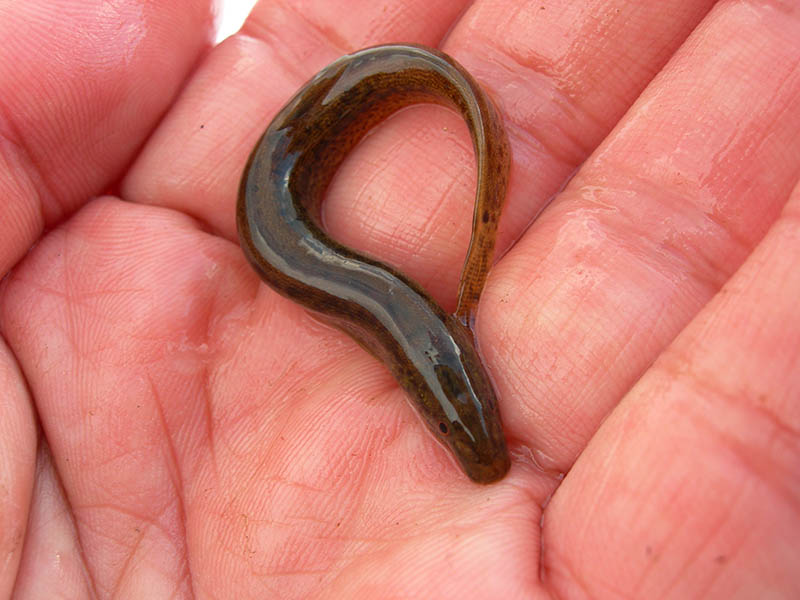
This loach is available in both its wild form and in a gold variety, called the Golden Dojo Loach. It is called by a number of common names including Oriental Weatherfish, Chinese Weatherfish, Japanese Weatherfish, Oriental Weather Loach, and Pond loach. In its wild form this loach has dark greenish gray to dark brown spots over a yellowish brown body (often mottled) with a paler belly. The Golden Dojo Loach variety can range from a yellow to an orange color and they are usually thin-bodied.
Dojo Loaches have some very unique qualities and are very ‘pet-like’. They can be trained to take food from your hand and even enjoy being touched. They are also jumpers. Should they happen to leap out of their home they can survive for a time even out of the water. A couple of ways the Weather Loach does this is by producing a thick mucus coating that keeps them moist; and by being able to swallow air, absorbing atmospheric oxygen through their hind gut.
This loach is very easy to care for. They wiggle about in an eel-like fashion scavenging the bottom for leftover bits of food, even munching on snails. They also like to dig and burrow into the substrate often burying themselves. Provide an aquarium that is large enough for its playful antics, have a soft substrate of sand or fine gravel, and have a good filter for the detritus they stir up. They are most active in the evening, so during the day they like hiding and resting places created with rocks and wood. Plants are nice but they should be potted.
They make an excellent community fish with other non-aggressive tank mates. This fish loves to socialize with other fish and loaches. They sometimes rest with them or sometimes chase them about, but they don’t hurt them.
- For information on keeping freshwater fish, see: Freshwater Aquarium Guide: Aquarium Setup and Care
Scientific Classification
| Kingdom: | Animalia |
| Phylum: | Chordata |
| Class: | Actinopterygii |
| Order: | Cypriniformes |
| Family: | Cobitidae |
| Genus: | Misgurnus |
| Species: | anguillicaudatus |
Dojo Loach – Quick Aquarium Care
| Aquarist Experience Level: | Intermediate |
| Aquarium Hardiness: | Very hardy |
| Minimum Tank Size: | 55 gal (208 L) |
| Size of fish – inches | 11.3 inches (28.58 cm) |
| Temperament: | Peaceful |
| Temperature: | 50.0 to 77.0° F (10.0 to 25.0° C) |
Habitat: Distribution / Background
The Dojo Loach or Weather Loach Misgurnus anguillicaudatus was described by Cantor in 1842. It is found across a wide range of eastern Asia from eastern Russia in Siberia and Sakhalin, in Myanmar and Northeastern Asia then southward to Central China, Japan Siberia, Korea, and Hainan. It is known by a number of other common names including Oriental Weatherfish, Chinese Weatherfish, Japanese Weatherfish, Oriental Weather Loach, and Pond loach. A gold variety is called the Golden Dojo Loach.
This species is listed on the IUCN Red List as least concern (LC) because it has a wide distribution. It is suggested, due to morphological variability, this fish may actually constitute several species. There is some decline in parts of its natural range associated with increased agriculture and ecosystem degradation. On the other hand, its global populations are increasing due to introductions. Introduction may be because they are used by anglers as live bait and so some possibly escape. They have also been introduced into the wilds of Australia and Hawaii. They are a food fish in many Asian countries, especially Japan.
The Weather Loach we are describing here, Misgurnus anquillicaudatusis, is one of three species commonly referred to as a weather loach. The other two are Misgurnus fossilis and Cobitis taenia. They all come from similar environments and have similar behaviors. The two Misgurnus species are identified by their color patterns with the M. anguillicaudatus being spotted and the M fossilis having horizontal stripes along the body. It is still being discussed whether the spotted one is simply a subspecies of the striped one, though they come from different geographical areas.
They inhabit rivers as well as still or slowly moving waters including lakes, ponds, swamps, and rice fields. They prefer muddy bottoms. During the dry season these loaches can tolerate oxygen depleted waters by using the posterior portion of the intestine and skin as supplementary breathing organs and will swim to the surface and gulp air while simultaneously expelling intestinal gases from the vent. It has also been recorded that these loaches can live for extended periods out of the water it they are in moist sand or mud. Feed on worms, small crustaceans, insects, insect larvae, and other small aquatic organisms.
- Scientific Name: Misgurnus anguillicaudatus
- Social Grouping: Groups
- IUCN Red List: LC – Least Concern
Description
The Dojo Loach will reach about 6″ (15 cm) in the aquarium, though in nature it can get much bigger. In the wild these fish are reported to reach up to about 11 1/4 inches” (28 cm). The Baensch Aquarium Atlas, Volume 2 reports them reaching up to 20″ (50 cm). They generally have a life span of between 7 – 10 years.
The body of this loach is long and cylindrical and almost eel-like. It is circular towards the front but flattens towards the rear, and it can be thin or heavy. They have are five pairs of barbels around the mouth, with two of them located on the lower jaw. They can be brown to yellow with a dark greenish gray to dark brown spots, usually creating a marbling pattern, and are paler on the underside.
A common color morph is the Golden Dojo Loach. It can range from a yellow to an orange color and they are usually thin bodied. They do have spots but they are usually extremely faint.
- Size of fish – inches: 11.3 inches (28.58 cm) – These fish will reach about 6″ (15 cm) in the aquarium, though are much larger in the wild.
- Lifespan: 10 years – They have a lifespan of about 7 – 10 years.
Fish Keeping Difficulty
The Dojo Loach is said to be bulletproof in terms of loaches. Even with this reputation they still need good water condition. They are not recommended for beginners because of their need for pristine water and having small body scales. Reduced scales makes them more prone to disease and very sensitive to medications used to treat disease. Experience in treating scaleless fish is very important to be able to give your loach a healthy and long life. Do not try to introduce these fish into biologically immature tanks.
- Aquarium Hardiness: Very Hardy
- Aquarist Experience Level: Intermediate – Loaches generally require pristine water conditions.
Foods and Feeding
Since they are omnivorous, the Dojo Loach or Weather Loach is not a picky eater and will generally eat all kinds of live foods, sinking pelleted and tablet foods, flakes, and algae. They like frozen foods as well. To keep a good balance give them a high-quality flake or tablet food everyday. Feed mosquito larvae and brine shrimp (either live or frozen), tubifex, daphnia, and some vegetable foods such as algae wafers. They will also eat snails, so are good for snail control.
- Diet Type: Omnivore
- Flake Food: Yes
- Tablet / Pellet: Yes – Sinking pellets.
- Live foods (fishes, shrimps, worms): Some of Diet – Enjoys live snails and earthworms.
- Vegetable Food: Some of Diet
- Meaty Food: Most of Diet
- Feeding Frequency: Several feedings per day
Aquarium Care
The most important thing for these loaches is that they always have clean and well-oxygenated water. Frequent water changes of about 30% a week are needed. With your weekly water change make sure to vacuum the gravel to remove all excess food and waste. Make sure not to remove the bio film on rocks, decor or no viewing panes of the tank. A magnet algae cleaner normally does a great job in keeping the viewing pane clear.
- Water Changes: Weekly – Water changes of about 30% weekly.
Aquarium Setup
The Dojo Loach is mostly a bottom dweller, but will spend some time in the middle and top of the aquarium. This is a good-sized fish that likes to be kept with 3 or more companions of its own kind. It needs at good-sized aquarium of 55 gallons or more and the longer the better, 4 feet being minimum. Never introduce this loach into a biological immature setup as these fish require pristine water. They do best in soft to medium water with subdued lighting. They need good water movement that provides plenty of oxygenation. An undergravel filter is a great choice for these fish as it creates high oxygen throughout the tank as well as reducing the waste. Adding a canister filter or powerheads to the setup will make the proper current for this loach.
The decor with this fish is really up to personal taste. Because they are constantly scavenging for tidbits and burying themselves in the substrate, use a sand or fine gravel that does not have sharp edges. If the tank is to resemble its natural habitat, a lot of smooth water-worn large rocks and stones can be scattered throughout. A couple pieces of driftwood and some twisted roots can make places for retreat. Be sure to provide hardy plants with the roots protected. These loaches are very inquisitive and like to explore so make sure to have a lot of caves and crevices. These fish can and will jump out of the tank if given the chance so make sure to have a tight-fitting cover.
- Minimum Tank Size: 55 gal (208 L) – The longer the tank the better, with 4 feet being minimum.
- Suitable for Nano Tank: No
- Substrate Type: Sand – Should be a soft substrate as this loach likes to burrow.
- Lighting Needs: Low – subdued lighting
- Temperature: 50.0 to 77.0° F (10.0 to 25.0° C)
- Range ph: 6.5-7.5
- Hardness Range: 5 – 12 dGH
- Brackish: No
- Water Movement: Moderate
- Water Region: Bottom – These fish are mostly bottom dwellers, but will spend some time in the middle and top of the aquarium.
Social Behaviors
A very good community fish, they get along well with other loaches and tank mates that are non-aggressive. Make sure other tank mates are not to small and mistaken food. Fish that prefer to habitat the middle to upper portions of the tank are best. These loaches should not be kept singly and should be kept in groups of 3 or more. They are quite lively and active, especially in the evening. They will scavenge about the substrate for tidbits of food and love to dig and burrow. Good for snail control.
- Venomous: No
- Temperament: Peaceful
- Compatible with:
- Same species – conspecifics: Yes – Should be kept in groups of 3 or more.
- Peaceful fish (): Safe – Safe as long as the fish are large enough not to be looked at as food.
- Semi-Aggressive (): Monitor
- Aggressive (): Threat
- Large Semi-Aggressive (): Threat
- Large Aggressive, Predatory (): Threat
- Monitor – As long as the fish is large enough it will be safe.
- Shrimps, Crabs, Snails: Threat – is aggressive – Will feed on snails and shrimp.
- Plants: Monitor – Plants need to be secured down, the Dojo will un root most plants.
Sexual differences
Mature males can be identified by the second pectoral ray being long and thick, and it appears more triangular than rounded.
Breeding / Reproduction
It has been said they have been spawned accidentally, scattering tiny red adhesive eggs, but not much more is known about the breeding habits of the Dojo Loach or Weather Loach and they are not yet bred commercially.
- Ease of Breeding: Unknown
Fish Diseases
The Dojo Loach is quite hardy, but Loaches in generally are more susceptible to disease than other aquarium fishes. This may have to do with the faint body scales. Take caution when introducing these fish to an established tank. This loach is also very sensitive to different medications used to treat many diseases; a separate hospital tank is needed. Cold water and condition changes can also cause stress to this fish which makes them even more prone to disease.
Most common disease that affects this loach is Ich. Ich is short for Ichthyophthirius, also known as “white spot disease”. It is a parasite that can attack nearly all aquarium fishes, but you’ll find that loaches are often the first to be attacked. Take great care in treating ick as loaches are very sensitive to the medications used to treat it. Often the dose is half of what is normally used.
The second most common thing that affects loaches is a thing called skinny disease. This can be diagnosed fairly easily. If your loaches are eating a nitrous and healthy amounts and still seems to loose weight it is a good chance it has skinny disease. This is caused by internal parasites and can be treated with medication if used carefully.
An outbreak of disease can often be limited to just one or a few fishes if you deal with it at an early stage. When keeping these sensitive types of fish, it is common to catch deteriorating water conditions and disease before other fish are affected. The best way to proactively prevent disease is to give your Weather Loach the proper environment and give them a well balanced diet. The closer to their natural habitat the less stress the fish will have, making them healthier and happy. A stressed fish will is more likely to acquire disease.
Anything you add to your tank can bring disease to your tank. Not only other fish but plants, substrate, and decorations can harbor bacteria. Take great care and make sure to properly clean or quarantine anything that you add to an established tank so not to upset the balance. It is recommended to read up on the common tank diseases. Knowing the signs and catching and treating them early makes a huge difference. For information about freshwater fish diseases and illnesses, see Aquarium Fish Diseases and Treatments.
Availability
The Dojo Loach or Weather Loach is one of the most common loaches and is readily available at pet stores or online.
Featured Image Credit: bonchan, Shutterstock