
Macaws are highly esteemed for their awesome beauty, intelligence, and large presence!
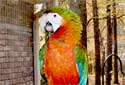
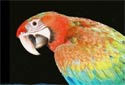
Macaws are vividly colored parrots that are large to medium in size. In decorating the feathers of these strikingly birds, nature surely ran wild in creating such dynamic and beautiful color combinations. These large, muscular birds have strong beaks that do earn them a degree of respect, and all macaw types are highly intelligent. Macaw species include the large Macaws and mini Macaws, and a number of hybrid Macaws have also been produced in captivity.
Though Macaws, especially the large Macaws, have a daunting presence and formidable beaks, they are highly intelligent. These stunning birds show exquisite control, selectively using their powerful beaks with finesse. They are able to interact with their keepers on many levels and quickly learn tricks. Many Macaw species are not only wonderful as pets, but make great show birds. Macaw calls are loud, but for some pet macaws this can transfer nicely into the ability to speak.
Besides being highly intelligent, Macaws have outgoing personalities and are very social. They adapt quickly to their cage and playpen, or aviary, and are quite playful. Their personality is such that they will form a close, loving bond with their keeper, and become a life-long companion. An important question, that is often misconstrued, is how long do Macaws live. Because of their large size it makes sense to think they would be very long lived, but the actual Macaw lifespan is between about 35-60 years in a good environment. They are easily outlived by the large cockatoos, and often by medium sized parrots like the Amazons.
Macaws definitely are among the most colorful and strikingly beautiful birds of the parrot family. Because of their great beauty and engaging personalities, pet Macaws are a favorite among bird lovers. They have been kept as pet birds for centuries. The activities of pet macaws are very animated and comical. Being very intelligent and inquisitive makes macaws relatively easy to train. Combine these two wonderful traits and you have a great show bird!
A bird guide for each Macaw species or Hybrid Macaw is provided for those in the list of Macaws below. Each guide provide in-depth information about living with that pet Macaw and the Macaws behaviors and activities. Macaw information includes housing, care, food, and feeding essentials along with breeding information. Tips are also included for handling and training Macaws.
- For more information about Macaw parrots, see: Macaw Care Guide: All about Macaws


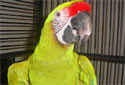


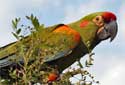


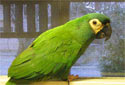
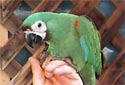
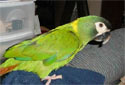
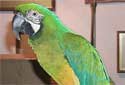
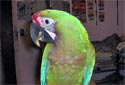
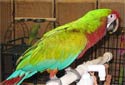
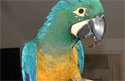
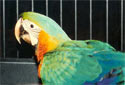
TBMH_AcB166_vsm.jpg)
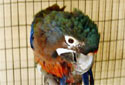
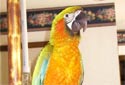
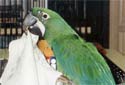
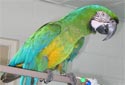

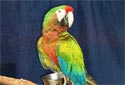
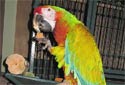
WBM_AcB177_vsm.jpg)



History of Pet Macaws
Macaws have been popularly kept as pets for decades, and some records indicate that the Green-winged Macaw may have been kept as long ago as the turn of the 17th century or earlier. Lyndon L. Hargrove notes early associations with Macaws in his Mexican Macaws Comparative Osteology, written in 1970. He references Indians back to 1536 that lived in areas that today are New Mexico and Arizona, as having “traded parrot’s feather for green stones far in the north”.
In 1716, a Spanish priest Padre Verlarde reported of many parrots “the Pima Indians raise because of their beautiful feathers… which they stripped from the birds in the spring for their adornment”. Other early documents also indicate that other tribes such as the Pueblo Indians raised Macaws and made use of their feathers for adornment. They also indicate an almost religious significance between an Indian keeper and a Macaw, suggesting that a person of poor moral character could not keep a red Macaw.
Perhaps one of the most interesting Macaw keeping stories is that of the inhabitants of Brazil. About 100 years ago, natives would remove a red feather and inoculate the area with the fluid from a frog or toad. The next feather to grow would be a bright orange or yellow. Although there was some temporary damage to the feather shaft, the new feather was of high value.
Large numbers of Macaws have been exported to the United States and Europe where they have been kept as pets since the beginning of the 20tth century. Several Macaw species were popular in the early 1900’s, but because these birds were generally sold singly, and difficult to sex, breeding was not an early priority. This period also saw interest in large parrots fluctuate up and down with turns in national events. Parrot keeping was affected both by the two world wars, as well as several periods of bird disease outbreaks. After World War II, with inexpensive air transportation, importation rose. Keeping large parrots again become highly favored. Parrots of all types arrived in abundance into the United States, spurring aviculture and captive breeding. Today bird importation is greatly restricted, but many species are successfully captive bred and Macaws are readily available.
Macaw Habitat
Macaws are found in Mexico, Central America, South America, and formerly in the Caribbean.
- Macaws in the Wild
Most of the Macaws in the wild are found in tropical rainforests, but there are some exceptions. The Red-fronted Macaws are found in semi-desert regions where they nest in cracks or holes in cliff faces and the Yellow-collared Macaw inhabits grasslands. Those that live in the forests are found primarily in rain forests along waterways and in palm swamps. They build their nests in holes of trees and eat seeds from the fruits found in the canopies.
Yet even within the rainforest, macaw habitats vary between species, for example the Scarlet Macaws live in the lowlands, while the Red-bellied Macaws are found in swampy areas. The Hyacinth Macaws will move with the seasons, going from open canopies of the rainforests, to a mature palm forests, and then to a more open country of grassy marshes. - Endangered Birds
The status of all the living Macaw species in the wild are of concern. Several are highly endangered birds and threatened with extinction. With a combination of factors, including destruction of the rainforests and their natural habitats, hunting, and collection for the pet trade, all the Macaws are subjects of conservation and listed on the IUNC Red List of Threatened Species. Some Macaw species are extinct, and a couple have not been seen in many years and are thought to be gone or close to extinction. All show signs of diminished populations and so are considered to be endangered birds, threatened, vulnerable, or of concern.
Currently the IUNC Red List of Threatened Species shows that 2 of the Macaw species are Critically Endangered (CR), 3 are Endangered (En), 1 is Near Threatened (NT), 2 are Vulnerable (VU), and 9 are of Least Concern (LC).
Breeding Macaws in captivity is helping preserve some species and helps reduce the number of wild caught birds. However these birds are monomorphic, meaning their sex cannot be determined by their markings or the color of their feathers. For successful breeding, these birds can be sexed by a surgical probe, endoscopy, a DNA test, or a chromosomal analysis.

Macaw Species
Today there are 17 living species of macaws. For a number of years they were placed in just four genera, but scientists have been (and still are) adjusting this. More recently they have been described in 6 genera, but even that is still somewhat confused and may be changed. Most of the pet macaws come from the Ara group, the Diopsittaca group, and the Primolius group.
- Genus Ara
This genus contains 8 of the 17 species. The most easily recognizable are the large macaws because of their large size and vivid coloration. The best known are:- Blue and Gold Macaw Ara ararauna
- Green-winged Macaw Ara chloropterus
- Scarlet Macaw Ara macao.
- Military Macaw Ara militaris
- Buffon’s Macaw Ara ambigua
- Severe Macaw or Chestnut-fronted Macaw Ara severus
- Genus Primolius
The macaws in this group are three of the smaller mini macaws. In the past they have been included in the Ara group, and then included in the Propyrrhura group. More recently they have been placed in this group, though it is subject to debate. Due to the naming rules there may be precedence given to the Propyrrhura group, so we may yet see another name change. The Macaw species currently in this group are:- Yellow-collared Macaw Primolius auricollis
- Illiger’s Macaw or Blue-winged Macaw Primolius maracana
- Blue-headed Macaw Primolius couloni
- Genus Diopsittaca
These are three of the smaller or mini macaws. These birds are often listed in the Ara group as well.
This group contains three suggested subspecies of the Red-shouldered Macaw species Diopsittaca nobilis, which are:- Hahn’s Macaw Diopsittaca nobilis nobilis, the nominate species and the smallest macaw species
- Noble Macaw Diopsittaca nobilis cumanensis
- Long-winged Macaw Diopsittaca nobilis longipennis
- Genus Anodorhynchus
The macaws in this group are either highly endangered or critically endangered birds. This group includes:- Hyacinth Macaw Anodorhynchus hyacinthinus
- Glaucous Macaw Anodorhynchus glaucus
- Lear’s Macaw Anodorhynchus leari, also known as the Blue Macaw or Indigo Macaw.
- Genus Orthopsittaca
There is only one mini macaw in this genus. It too used to be placed in the Ara group but most authorities now place it in the genus Orthopsittaca. Although this Macaw is easy to catch, this bird is very difficult to keep in captivity due to a highly specialized diet and it is very difficult to breed. It was listed as Endangered in 2007 – IUCN, but as of 2009 it been down listed to the status of Least Concern. These macaws in the wild, appear to be more abundant than previously thought, though their habitat is still at risk:- Red-bellied Macaw Orthopsittaca manilata
- Red-bellied Macaw Orthopsittaca manilata
- Genus Cyanopsitta
This genus contains only one species, and it is very rare and critically endangered:- Spix’s Macaw Cyanopsitta spixii, also known as the Little Blue Macaw
Macaws as Pets
Macaws can make excellent pets. They have great appeal not only for their striking appearance but because they are playful and loving. They also have a long life span and are very hardy. The macaw calls can be quite loud however, and they do love to chew anything they can get a hold of. All macaws require good socialization and consistent training on an ongoing basis to make good pets.
When choosing a pet bird, the first thing to think about are the types of macaws and determine which ones are suitable to your lifestyle. The size of the macaw and the facility it will require, the cost of obtaining it, and the costs of keeping it are important considerations. Smaller mini macaws, though not quite as vividly colored, take somewhat less space and their associated costs may also be less than for large macaws or hybrid macaws.
Another very important consideration is their conservation status. The number of macaws is increasing due to aviculture, however all species of macaws in the wild are of concern and most are endangered birds. Macaws that are highly endangered birds and not firmly established in captivity, should not be kept individually as pets. Rather these macaws should be paired up for breeding to help ensure the sustainability of these birds into the future. Macaws that are highly endangered are generally quite rare and usually very expensive, and some are simply not available.

Types of Macaws
Macaw types range dramatically in size; with the largest being the Hyacinth Macaw whose wingspan can reach an impressive 42″ to the smallest being the Red-shouldered Macaw, similar in size to some of the larger Aratinga Conures.
All macaws share the same physical characteristics. They all have long tails, slim bodies, and broad heads. Where they differ is in size and the spectacular coloration of their plumage. The naturally occurring macaws consist of the large macaws and the mini macaws. All of these macaws in the wild are endangered birds. There are also hybrid macaws produced in captivity. Hybrid macaws are not endangered birds.
Types of Macaws can be broken into three groups. The first two groups are Large Macaws and Mini Macaws, and these are true Macaw species. The third group is the captive bred Hybrid Macaws. These are Macaws developed by crossing two different Macaw species to create first generation F 1 Macaw Hybrids, or further crossings to develop second generations F 2, or further generations of hybrids. To learn more about each of these groups and to identify particular species or hybrids, look at the large macaws, mini macaws, or hybrid macaws articles.
- Large Macaws There are 11 living species (and several subspecies) in what are considered the Large Macaw. The Cuban Macaw Ara tricolor, also known as the Hispaniolan Macaw, is not included here as it is considered to now be extinct.
- Blue and Gold Macaw
- Blue-throated Macaw
- Buffon’s Macaw
- Glaucous Macaw
- Green-winged Macaw
- Hyacinth Macaw
- Lear’s Macaw or Blue Macaw
- Military Macaw
- Red-fronted Macaw
- Scarlet Macaw
- Spix’s Macaw
- Mini-Macaws There are six small macaw species in what is considered the Mini Macaw group, These are generally macaws who’s totally length does not exceed 20″ (50 cm).
- Blue-headed Macaw
- Illiger’s Macaw
- Severe Macaw
- Red-bellied Macaw
- Red-shouldered Macaw (Subspecies include: Hahn’s, Noble, Long-winged)
- Yellow-collared Macaw
- Hybrid Macaws Macaw hybrids, crosses of different macaws, are produce for their amazing coloring. See the Hybrid Macaw Parrots information, for pictures of the different types of hybrids to aid in identification, and to learn which breeding combination makes up each of these.
There are currently 35+ different types of hybrid macaws. Following is the approximate number of hybrids we are currently aware of in each generation of crosses:- First generation F 1 hybrid macaws: 15
- Second generation F 2 hybrid macaws: 16
- Third generation F 3 (or more) hybrid macaws: 5
Featured Photo by bergslay, Pixabay