
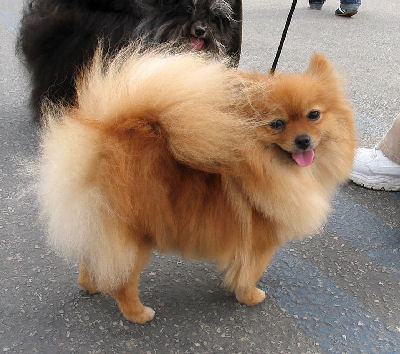
The Pomeranian is a classy looking toy breed, being small and fluffy with a fox-like face.
Pomeranians are lively and smart. They are also independent and strong-willed. Many people fall in love with this little fluffy dog because of its beautiful presentation. It smiling wedge-shaped face, dark almond shaped eyes, and button nose are simply enchanting.
The Pomeranian or Dwarf Spitz is one of the small dog breeds, and is affectionately called the the Pom. They are great companion dogs for adults and older children. If this toy dog is properly socialized, it can also usually get along well with other pets. They catch on quickly when training, and can learn lots of tricks. When selecting a Pomeranian, pay special attention to the condition of its eyes and teeth. It is also advisable to check bloodlines for hereditary problems.
- Kingdom: Animalia
- Phylum: Chordata
- Class: Mammalia
- Order: Carnivora
- Family: Canidae
- Genus: Canis
- Species: lupus familiaris
Common Name(s)
Pomeranian, Zwergspitz, Dwarf Spitz, Toy German Spitz, Pom
Breed Type
The Pomeranian is a toy breed, and is intended to be a house pet. The Pomeranian is rather sensitive to heat, so it does best in fairly cool climates.
Background
The Pomeranian’s origins go back to sled dogs from Greenland and Lapland. Selective breeding by English breeders reduced the breed’s size. The Pomeranian is known for being very popular among royalty. Queen Victoria made Pomeranians very popular in late 1800’s and many famous people at that time had Poms as pets. The Pomeranian is now a member of the American Kennel Club toy group, originally they were classified in the miscellaneous group until 1892 when the AKC classified them into the toy dog group.
Description
Pomeranians are very small and fluffy. They have a fox-like face, usually dark eyes, and pointed ears. They are most commonly solid colored, but some are parti-colored. Their average height is 7-12 inches, and they usually weigh between 3 and 7 pounds. They can be found in a wide variety of colors such as orange, red, white, blue, brown, black and cream.
Care and Feeding
Pomeranians do best on a diet of dry food due to the likelihood of tooth and gum problems. Foods containing fish, beef, and wheat are recommended. Giving the dog teeth cleaning chews is also a good idea.
Pomeranians need frequent brushing. They can be cleaned with dry shampoo as needed. Their eyes and ears need special attention, and should be cleaned each day. It’s also important to take good care of their teeth, brushing them at least once a week.
Pomeranians need annual checkups to keep them healthy. Vaccinations should be given as follows:
- 6-8 weeks: Distemper, Leptospirosis, Hepatitis, Parainfluenza, Parvo, and Corona virus (DHLPPC)
- 10-12 weeks: Second DHLPPC
- 14-16 weeks: Third DHLPPC and rabies
- Annually: DHLPPC and rabies booster
Poms shed heavily, so frequent vacuuming is a must. It’s also best not to leave blankets and pillows lying around on the furniture, because your Pomeranian can curl up under them for a nap and potentially be sat on.
Housing Your Dog
Pomeranians are indoor dogs, and they are quite content in small apartments. They are active and love to play with small dog toys. They may become overheated in hot weather, so it is best to keep them inside in the air conditioning if possible.
Social Behaviors
Pomeranians can do well with other pets, as long as they are familiar with them. They are independent, yet they make wonderful companions for adults, the elderly, and older children. They tend to get nervous around young children.
Handling and Training
When training a Pomeranian, being firm is the key to success. They have minds of their own, and trainers must let them know who is boss. They can learn to do tricks, and they usually respond well to crate training. They also make great show dogs.
Activities
Pomeranians need regular exercise, but not as much of it as larger breeds. Short daily walks and regular play sessions should take care of their activity needs.
Breeding/Reproduction
When considering a mate for a Pomeranian, it is important to research the potential mate’s bloodline. Pomeranians are susceptible to a number of hereditary problems. Females sometimes need Cesarean sections when giving birth, especially if they are very small.
Common Health Problems
Frequent ailments of Pomeranians include slipped stifle, dislocated kneecaps, eye infections, heart problems, and skin disorders. Regular visits to the veterinarian will help keep your Pomeranian in good health and aid in early detection of these problems.
Availability
Pomeranians are easier to find in some areas than in others, but most people can locate nearby breeders. They are available in some pet stores as well. Prices vary, and can range from $350 to $1,000 or more.
References
“Pomeranian“, Dog Breed Info Center, Copyright 1998-2008
“Pomeranian (dog)“, Wikipedia, Copyright 2008
Cusick, William D., “What to Feed a Pomeranian“, Referenced online, 2008
“Pomeranian Puppies for Sale“, Copyright PuppyFind.com, LLC, Referenced online, 2008
Featured Image Credit: leungchopan, Shutterstock