
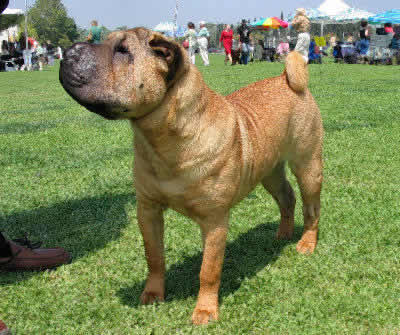
An ancient and rare breed, the Chinese Shar Pei originated from the Guangdong province of China.
The Chinese Shar-Pei is a non-sporting breed. It is a very old breed, and little is known about its ancestry. It is thought to be a descendant of the Chow Chow, but has little in common with this breed except for its dark tongue. It originally had a significantly different look than it does today, with a sleeker build and less wrinkled appearance. The older type is known by breed enthusiasts as the “bone-mouth” Shar-Pei, and the newer type as the “meat-mouth” Shar-Pei. Over the years, Shar-Pei have served as farm dogs and fighting dogs, but they are now most often pets and watchdogs.
The Chinese Shar-Pei are extremely loyal and highly intelligent. They are active dogs, and are quite playful around their families. These dogs are, however, dominant and independent. They make great companions for confident handlers. Like cats, they hate water but are very clean animals. The Shar-Pei’s bravery and dominant attitude makes it a good watchdog.
When selecting a Shar-Pei, check bloodlines for skin problems, Shar-Pei fever, eye problems, and signs of kidney failure. This breed is also prone to food allergies.
- Kingdom: Animalia
- Phylum: Chordata
- Class: Mammalia
- Order: Carnivora
- Family: Canidae
- Genus: Canis
- Species: lupus familiaris
Common Name(s)
Chinese Shar Pei, Shar-Pei, Chinese Fighting Dog
Breed Type
The Chinese Shar Pei is a non-sporting breed. An ancient and rare breed, the Shar Pei was originally bred to be a fighter and guard dog. This breed does best in climates that are not too hot.
Background
The Shar Pei hails from the Guangdong province of China. Originally sleeker and less wrinkly, the breed has changed substantially in its time. The Shar-Pei is a very old breed, and little is known about its ancestry. It is thought to be a descendant of the Chow Chow, but has little in common with this breed except for its dark tongue. Over the years, Shar-Pei have served as farm dogs and fighting dogs, but they are now most often pets and watchdogs.
Varieties include the traditional type of Shar Pei, the “bone-mouth” Shar Pei, which has with fewer wrinkles and a smaller head, Western style of Shar Pei is the “meat-mouth” Shar Pe, which is most common in the Western world. Hybrids include the Ba-Shar (Basset Hound and Shar Pei mix) and the Bull Pei (English Bulldog and Shar Pei mix).
Description
The Shar-Pei’s most distinguishing feature is its wrinkles. Most are very wrinkly as puppies, but they lose these wrinkles to varying degrees as they grow. Some have large heads with heavy wrinkling, while others have smaller heads with fewer wrinkles. Shar-Pei have small, triangular ears that fall forward, wide, blunt muzzles, and tapered tails that curl up over the back.
There are three different Shar-Pei coats. The horse coat is rough, prickly and short. The brush coat is slightly longer and smoother. The bear coat is over an inch long and often hides the dog’s wrinkles. Bear coated Shar-Pei cannot be shown. Shar-Pei may be any solid or sable color.
Shar-Pei are 18 to 20 inches tall and weigh 40 to 55 pounds.
Care and Feeding
The Shar-Pei needs a diet high in fiber and carbohydrates. Best foods include pork, poultry, beet pulp, wheat and rice. Wheat may cause allergies to develop. It is important to watch for signs of food allergies and adjust the diet accordingly. Puppies of the breed grow rapidly and will need plenty to eat.
Shar Peis require regular brushing, but no trimming. The horse coated Shar-Pei sheds rather heavily during molting, and will need weekly bathing and extra brushing to remove dead hair.
The Shar Pei needs annual checkups in order to ensure its health. Vaccinations are due as follows:
- 6-8 weeks: Distemper, Leptospirosis, Hepatitis, Parainfluenza, Parvo, and Corona virus (DHLPPC)
- 10-12 weeks: Second DHLPPC
- 14-16 weeks: Third DHLPPC and rabies
- Annually: DHLPPC and rabies booster
Shedding varies according to coat type, but regular vacuuming is important when there is a Shar-Pei in the house. This breed often has skin allergies, and these allergies may lead to infections in the absence of proper care.
Housing Your Dog
Shar Peis can live indoors our outdoors. If kept outdoors, they will need adequate shade and plenty of water. They do well indoors as long as they get plenty of exercise.
Social Behaviors
Shar Peis are loyal companions, and they tend to tolerate strangers well. They can get along with children and other pets if they are properly socialized when young. Dominance issues may arise when around other dogs.
Handling and Training
The Shar Pei’s stubbornness may cause difficulties in training if the owner is not firm enough. Consistency is a must. House training is usually quite easy with this breed.
Activities
Chinese Shar Peis need lots of exercise, including a daily walk. It is important to keep in mind that they are sensitive to heat, so care should be taken not to over-exert them in warm weather. These dogs do not like the water, so it is not advisable to try to take them swimming.
Breeding/Reproduction
When selecting a mate for your Shar Pei, it is important to be aware of any hereditary disorders. Skin problems and kidney failure are two of the most common in this breed.
Common Health Problems
Shar-Pei fever is one of the most common health problems in the breed. It is a condition that stems from elevated levels of interleukin 6, causing fever and swollen hocks. It can result in renal and liver failure. Pain and inflammation can be treated with NSAIDs, and drugs for the prevention of amyloidosis may be indicated for dogs that have recurring Shar-Pei fever.
Availability
Once very rare, Shar-Pei are now available in most areas. Prices range from $600 to over $1,000.
References
“Chinese Shar-Pei“, Wikipedia, Copyright 2008
“Chinese Shar-Pei“, Dog Breed Info Center, Copyright 1998-2008
Cusick, William D., “What to Feed a Chinese Shar-Pei“, Referenced online, 2008
“Chinese Shar-Pei Puppies for Sale“, Copyright PuppyFind.com, LLC, Referenced online, 2008
Featured Image Credit: Alexeysun, Shutterstock